


Ketamine Therapy
Ketamine therapy at MindMorph is ketamine-assisted psychotherapy: a low, prescribed dose of sublingual ketamine taken in a private room at the Lakewood office, with me present, inside a course of preparation and integration therapy. It is an off-label treatment considered for adults whose depression, anxiety, or trauma-related symptoms have not responded to standard care. A full psychiatric and medical evaluation comes first, and a free consultation comes before that.
 Integrative Psychiatry InstituteCertified Psychedelic-Assisted Therapy Provider (opens in a new tab)
My ketamine care draws on the Integrative Psychiatry Institute's year-long psychedelic-assisted therapy training: preparation, the medicine session, and integration afterward. Read about integration therapy
What ketamine therapy is, and what it is not
Ketamine is an FDA-approved anesthetic. It is not FDA-approved for the treatment of any psychiatric disorder, so when a licensed prescriber uses it for depression, anxiety, or PTSD, that is off-label prescribing. Off-label use is legal and common in medicine, but it means you should hear the limits as clearly as the possibilities. I will tell you both.
Ketamine acts on the brain's glutamate system (the NMDA receptor) rather than the serotonin system that most antidepressants target. Research links this action to neuroplasticity, the brain's capacity to form new connections, which is why the sessions are paired with therapy: the weeks after a dose are a good time to practice thinking and feeling differently.
At MindMorph the medicine is a sublingual troche, a small tablet that dissolves under the tongue. No needles, no IV line, no infusion suite. You take it in a calm private room with eye shades, music, and a weighted blanket if you want one, and you rest while I monitor you.
Who ketamine-assisted psychotherapy is for
It is considered for adults with depression, anxiety, or trauma-related conditions that have not improved enough with therapy and conventional medication. Many of the people I see have tried two or more antidepressants; some have been in therapy for years and feel stuck.
It is not for everyone. Uncontrolled high blood pressure, active psychosis, certain heart conditions, and a history of problematic substance use are among the reasons I may say no or ask for more workup first. Ketamine is also not a walk-in treatment: the screening visit matters as much as the dosing session, and I review your full medical history before anything is prescribed.
How a course runs at MindMorph
- Evaluation. Psychiatric history, medical history, current medications, blood pressure and heart health, and a substance-use screen, to confirm that ketamine is safe and appropriate for you, followed by a conversation about what you want from the work.
- Guided sublingual sessions. Clinically supervised dosing in a quiet private room. Vitals and level of awareness are checked throughout. The experience itself typically runs one to two hours, with time afterward to ground before you leave.
- Integration. Therapy and wellness guidance after each session, so what came up becomes something you can use rather than a vivid afternoon you cannot explain.
| Stage | What happens | Where |
|---|---|---|
| Free consultation | A conversation about history, goals, and whether this fits | Video or phone |
| Evaluation | Psychiatric and medical screening, vitals, medication review | Office or video |
| Preparation | Intention, logistics, what to expect in the room | Office or video |
| Dosing session | Supervised sublingual dose, rest, monitoring, grounding (about two hours) | Lakewood office |
| Integration | Therapy in the days after each session | Office or video |
| Maintenance | Only if your response supports it; reviewed together | Office or video |
Protocols are individualized. An initial series of several sessions over a few weeks is common, followed by integration work and any maintenance your response supports. Plan a ride home after every dosing session; you should not drive until the next day after a full night's sleep.
Sublingual ketamine compared with IV infusion
| Feature | Sublingual ketamine at MindMorph | IV infusion at a traditional clinic |
|---|---|---|
| Delivery | Troche dissolved under the tongue | Administered through an IV line |
| Comfort | Needle-free | Requires venous access |
| Setting | Therapist-guided, quiet, one patient at a time | Often clinical and procedural |
| Integration | Therapy and wellness follow-up built into the course | Focus is mainly on the dose |
| Cost | Published on the rate card; no equipment or infusion staffing | Typically higher because of equipment and staffing |
How this differs from Spravato
Spravato (esketamine) is a nasal spray that is FDA-approved for treatment-resistant depression and given only in a certified setting with two hours of monitoring, under a federal safety program. Generic ketamine is prescribed off-label with more flexible dosing and a therapy arc around it. Spravato is more often covered by insurance; ketamine-assisted psychotherapy is usually self-pay with a superbill. Which fits better depends on your history, goals, and coverage, and I will walk you through both.
The integrative layers around each session
The window of neuroplasticity that opens after a dose is the point, not the dose itself. Depending on what your evaluation shows, your plan may also include:
- Genetic and lab testing, to identify biological factors that influence medication response and nutrient absorption
- Nutrition and supplement guidance, aimed at neurotransmitter balance and steadier energy
- Yoga, movement, and breathwork, for mood stability and stress regulation
- Sleep and circadian support, because recovery and resilience depend on it
- Mindfulness and somatic grounding, to anchor insight in the body rather than leave it as an idea
What people describe
Some patients describe a faster response than they had with conventional antidepressants, more motivation and clarity, fewer intrusive thoughts, less emotional numbness, and a renewed sense of connection and presence. Others notice a quieter, slower change. (Individual experiences vary. Results and coverage cannot be guaranteed.)
Conditions ketamine therapy may be considered for
- Treatment-resistant depression, when standard antidepressants have not provided relief
- PTSD and complex trauma, within trauma-informed therapy, to support emotional processing at a tolerable pace
- Anxiety disorders, paired with mindfulness and somatic work to settle hyperarousal
- Obsessive-compulsive disorder, alongside therapy, for intrusive thought loops
- Chronic stress and burnout, where adaptability and energy have run down
Cost and insurance
Insurance coverage for sublingual ketamine is limited because it is an off-label use. Ketamine-assisted psychotherapy at MindMorph is self-pay: a KAP session is 120 minutes, and six- and eight-session packages are available at a lower per-session price when prepaid. Current figures, package terms, and superbill details are on the insurance and payment page. You receive a detailed superbill after each visit for possible out-of-network reimbursement, and HSA and FSA funds generally apply. If coverage matters most, Spravato is the option insurers more often pay for.
Where sessions happen
Dosing sessions are in person at the MindMorph office at 215 Union Blvd, Suite 125, Lakewood, CO 80228 (opening 12/1/26), serving Denver-area communities including Morrison, Golden, Highlands, and Boulder. The consultation, evaluation, preparation, and integration visits can happen by secure video for patients located in Colorado or Oregon at the time of the visit, so most of the course does not require a drive.
Why people choose MindMorph for ketamine therapy
One clinician throughout: a dual board-certified psychiatric and family nurse practitioner (PMHNP-BC, FNP-C) who does the evaluation, the dosing session, and the integration work. The protocols for dosing, monitoring, and stopping are set before you start. Administration is sublingual, so there is no needle, and the room is a quiet, trauma-informed space. Psychiatry, therapy, nutrition, and lifestyle planning sit in one plan instead of four referrals, and the conversation about benefits, limitations, and alternatives includes the alternative of not doing this at all.
Booking, cost, and safety
Start with a complimentary consultation, by video or phone, or call (720) 504-2181. There is no pressure in that call; it exists so you and I can both judge fit.
Ketamine therapy at MindMorph is an off-label service provided under medical supervision. Individual results and coverage vary. MindMorph does not guarantee outcomes or insurer reimbursement.
If you are in crisis, call or text 988 (Suicide & Crisis Lifeline) or call 911. This practice does not provide emergency services.


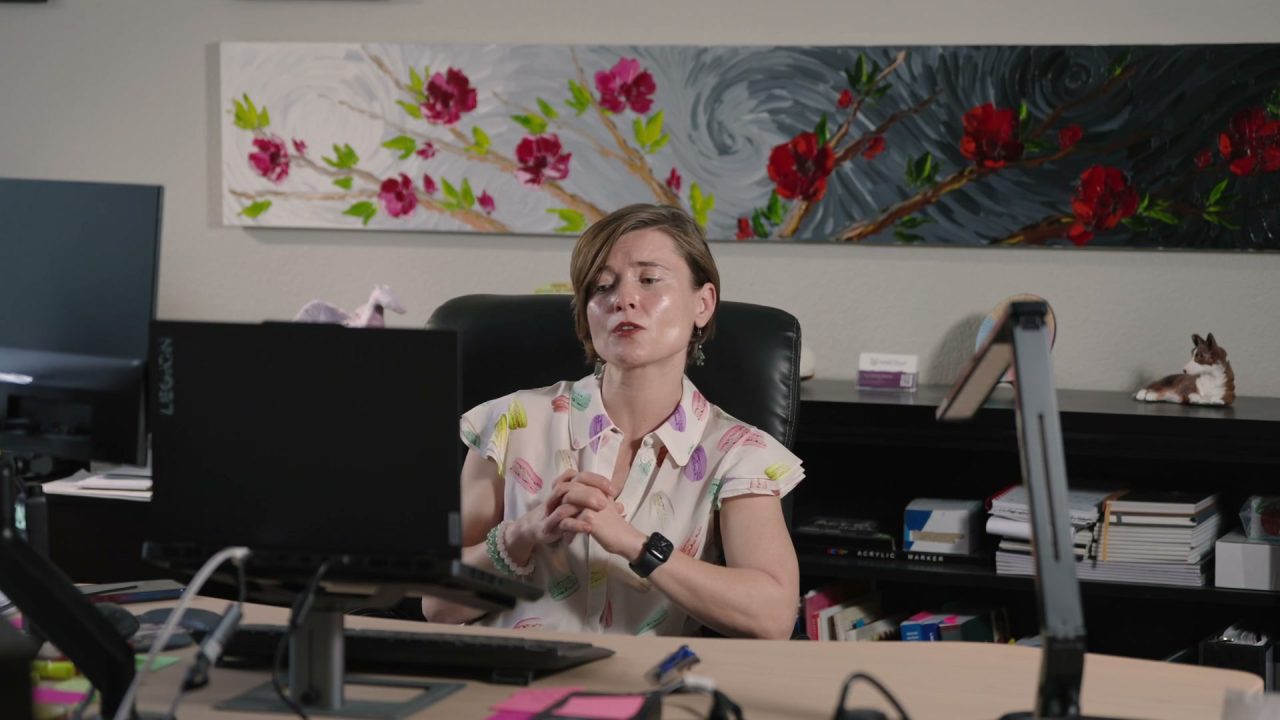
Preparation and integration visits are by secure video
Watch
-
 Length 0:45
The ketamine journey is not the whole treatment
The session is one chapter, not the book. The ketamine experience is described hour by hour elsewhere on this site; this 45-second clip, from my psychiatric practice, is the corrective. The two hours in the room are the part people ask about, and the screening before and the integration after are….
-
 Length 1:34
Ketamine therapy is not just the experience, integration matters
Many people think ketamine therapy is only about the experience itself, but clinically the most important work often happens after the session, during integration. That is my own framing of this 94-second video. In it I explain how ketamine can temporarily shift rigid patterns of thinking….
Questions
Yes. Ketamine is an FDA-approved medication that licensed clinicians may prescribe off-label for mental health conditions. Every session at MindMorph is prescribed after a psychiatric and medical evaluation and supervised in person by a licensed prescriber. What is not legal is buying ketamine outside a prescriber's care.
No. Ketamine is FDA-approved as an anesthetic, and the FDA states that it is not approved for the treatment of any psychiatric disorder. Using it for depression, anxiety, or PTSD is off-label. Spravato (esketamine) is the related nasal spray that does carry FDA approval for treatment-resistant depression.
Under clinical supervision, at the doses used here, ketamine has a well-established safety profile. Your full medical history is reviewed before any treatment, blood pressure and level of awareness are monitored through every session, and certain conditions, such as uncontrolled blood pressure or active psychosis, rule it out.
Rarely, because sublingual ketamine for mood is an off-label use. Sessions at MindMorph are self-pay, with six- and eight-session packages at a lower rate. You receive a superbill for possible out-of-network reimbursement. Spravato, which is FDA-approved, is the ketamine-related treatment insurers more often cover.
Expect a dissociative state: the body feels distant, thoughts loosen, time stretches. That is a known effect of the medicine, not a side effect to fear, and it fades within an hour or two. You rest with eye shades and music, I stay in the room, and you do not drive until the next day.
Spravato is esketamine nasal spray, FDA-approved for treatment-resistant depression, taken only in a certified setting with two hours of monitoring, and often covered by insurance. Ketamine-assisted psychotherapy uses generic ketamine off-label, with more flexible dosing and a therapy arc, and is usually self-pay.